October 31, 2026
What Does It Take to Build a Thriving Community? Start with Relationships.
Three leaders explore how philanthropy, public systems, and community organizations can work together to strengthen families.
What if families could get the support they need before a crisis? What if organizations spent less time competing for resources and more time working together? And what if we measured our commitment to children not in months or grant cycles, but in years?
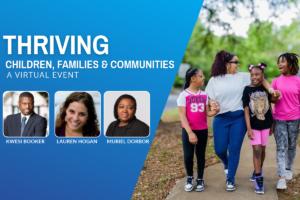
These were some of the questions at the heart of our recent Thriving Communities virtual conversation, featuring Lauren Hogan of the W.K. Kellogg Foundation, Kwesi Booker of Hennepin County Children & Family Services, and Muriel Dorbor, Program Director at Friends of the Children–Twin Cities.
Despite their different perspectives, all three returned to a common theme: lasting change requires relationships, collaboration, and a willingness to show up for the long haul.
Supporting families before a crisis
For Kwesi, who has spent more than 25 years working in child welfare, one of the most important opportunities is changing how families access help.
Too often, families encounter services only after becoming involved with child protection. Kwesi described Hennepin County's growing emphasis on prevention, including community-based family resource centers where families can voluntarily access support.
"I think those are the ways we have to move our system towards much further upstream towards prevention," Kwesi shared.
His vision is a system where a caregiver seeking help with a child's behavioral challenges, for example, can connect directly with trusted community organizations rather than having to enter the child protection system first.
It's a shift from responding to crisis toward building the conditions that help families thrive.
Investing in relationships that last
Lauren brought another important perspective: meaningful collaboration doesn't happen automatically, and neither does lasting change.
"The reality is like effective collaboration takes time and money and capacity," she shared. "It's not magic, but it doesn't happen by accident either."
She challenged philanthropy to think beyond short-term investments and consider how funding can strengthen partnerships, support long-term commitments, and recognize the different roles organizations play in a community.
That philosophy is central to the Friends of the Children model.
At Friends of the Children–Twin Cities, children are paired with paid, professional mentors (called Friends) who commit to walking alongside them for 12+ years, no matter what.
Sometimes showing up makes all the difference
Muriel brought the conversation back to what those commitments look like in practice.
Friends collaborate with schools, caseworkers, caregivers, and other trusted adults. They help children build literacy skills, navigate challenges, and experience the confidence that comes from knowing someone is consistently in their corner.
But their relationships extend beyond the child.
Muriel described how a Friend might help a caregiver get groceries, offer a listening ear during a stressful week, or attend a kindergarten graduation when a parent cannot leave work.
Last school year, the Twin Cities team attended approximately 18 kindergarten graduations.
"Just going there, showing up consistently, being that extra person," Muriel shared.
These moments might seem small. But together, they build something powerful: trust, belonging, and stability for children and families.
Building the village together
Throughout the conversation, one thing became clear: no single organization, funder, or public agency can create a thriving community on its own.
Families need accessible resources. Community organizations need sustainable partnerships. Public systems need opportunities to work further upstream. And philanthropy has an important role in helping create the conditions for that collaboration.
At Friends of the Children–Twin Cities, we're proud to be part of that larger village. Because when we invest early, stay longer, and work together, we create more opportunities for children and families to thrive.
Interested in learning more about Friends of the Children–Twin Cities or exploring opportunities to partner with us? We'd love to connect.